Lum Medicinal Bathing of Sowa Rigpa
Introduction
Lum medicinal bathing of Sowa Rigpa represents a significant aspect of traditional Tibetan medicine, practiced predominantly among the Tibetan ethnic group. This ancient practice is deeply rooted in a holistic understanding of wellness, integrating aspects of physical health, mental balance and spiritual harmony. The term "Lum" in Tibetan refers to the collective knowledge and practices involving bathing in natural hot springs, herbal waters, or steam. These practices aim to restore balance within the body and mind, promoting health and treating various ailments. Lum bathing is a manifestation of the Sowa Rigpa system, which translates to the "Science of Healing", a traditional healing system developed and practiced in Xizang.
Lum medicinal bathing of Sowa Rigpa, knowledge and practices concerning life, health and illness prevention and treatment among the Tibetan people in China, was inscribed onto the Representative List of the Intangible Cultural Heritage of Humanity by UNESCO in 2018.
History
The history of Lum medicinal bathing is interwoven with the cultural and religious tapestries of Tibetan society. Its origins are greatly influenced by the Bon religion and Tibetan Buddhism, which have infused this practice with spiritual and philosophical dimensions. Over centuries, Lum bathing has evolved as a community-driven knowledge system, enriched by the folk experiences and traditional wisdom of the Tibetan populace. A crucial element in its historical development is the Four Medical Tantras (Rgyud bzhi), a foundational text in Tibetan medicine that underscores the principles of diagnosis, prevention and treatment of illnesses. The practice has been perpetuated through generations, gaining recognition and formalization in modern medical education curricula as complementary knowledge to conventional medicine.
Principles of Sowa Rigpa
Sowa Rigpa is grounded in the belief that health is maintained through the balance of the three dynamics: Lung (wind), Tripa (bile), and Pekan (phlegm). These dynamics are influenced by the five elements theory — earth, water, fire, air, and space — which form the basis of all matter and life in the universe. Health, according to Sowa Rigpa, is achieved through the harmonious interaction of these forces, with disease viewed as an imbalance among them. Lum medicinal bathing, as a therapeutic technique, addresses these imbalances by utilizing the properties of natural elements, such as heat from springs or herbs, to restore equilibrium. The practice is not merely a physical treatment but a holistic approach that includes dietary regulations, lifestyle adjustments and spiritual practices.
Therapeutic Techniques
The therapeutic procedures in Lum medicinal bathing are diverse and meticulously structured. They encompass a variety of practices tailored to target specific health issues and balance the body's internal energies.
Types of Medicinal Baths
Lum medicinal bathing includes several techniques, primarily categorized into bathing in natural hot springs, herbal water baths and steam baths. Each type serves distinct therapeutic purposes. Hot spring baths are renowned for their mineral-rich waters that aid in detoxification and skin rejuvenation. Herbal water baths involve immersing in water infused with medicinal herbs that target particular health conditions, such as joint pain or skin disorders. Steam baths, on the other hand, use vapor infused with herbal essences, providing respiratory benefits and promoting relaxation.
Preparation of Herbal Mixtures
The preparation of herbal mixtures for Lum bathing is a detailed process overseen by skilled practitioners, including the Manpa (physician), Lum Jorkhan (pharmacist), and Manyok (assistant). These mixtures are formulated based on the principles of Sowa Rigpa, utilizing herbs known for their therapeutic properties. The selection of herbs is dictated by the patient's specific needs, the seasonal characteristics, and the intended therapeutic outcome. This intricate process underscores the deep knowledge and understanding required to harness nature's resources effectively.
Cultural Significance
Lum medicinal bathing holds profound cultural significance among Tibetan communities. It is not merely a health practice but a cultural heritage that embodies the community's values, beliefs, and collective identity. The practice is celebrated in various cultural expressions, including folklore, epics, art and religious rituals. It fosters social cohesion by promoting a code of behavior that emphasizes respect for nature and communal well-being.
Modern Development
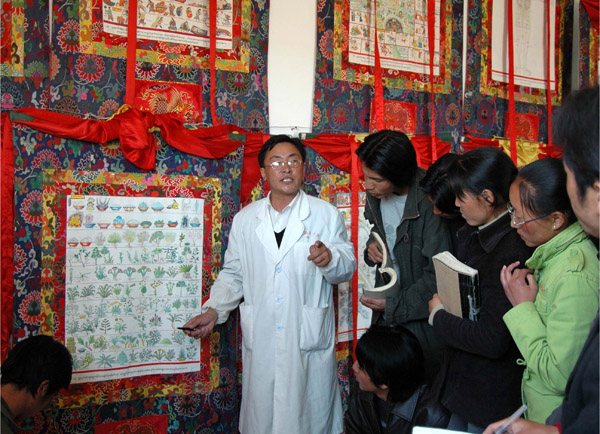
In contemporary practice, Lum medicinal bathing has adapted to meet the demands of modern society while retaining its traditional essence. It has been incorporated into the curricula of medical colleges, where students learn about its principles alongside conventional medical knowledge. Modern adaptations also involve the use of advanced research techniques to validate its efficacy scientifically.
Ongoing research and studies into Lum medicinal bathing have focused on exploring its therapeutic mechanisms and potential health benefits. Scientific investigations aim to substantiate the anecdotal evidence of its efficacy, examining aspects such as its impact on chronic health conditions, mental well-being and overall quality of life.








